ÇETİN AY, "THE WAR HAS STOPPED IN IRAN"
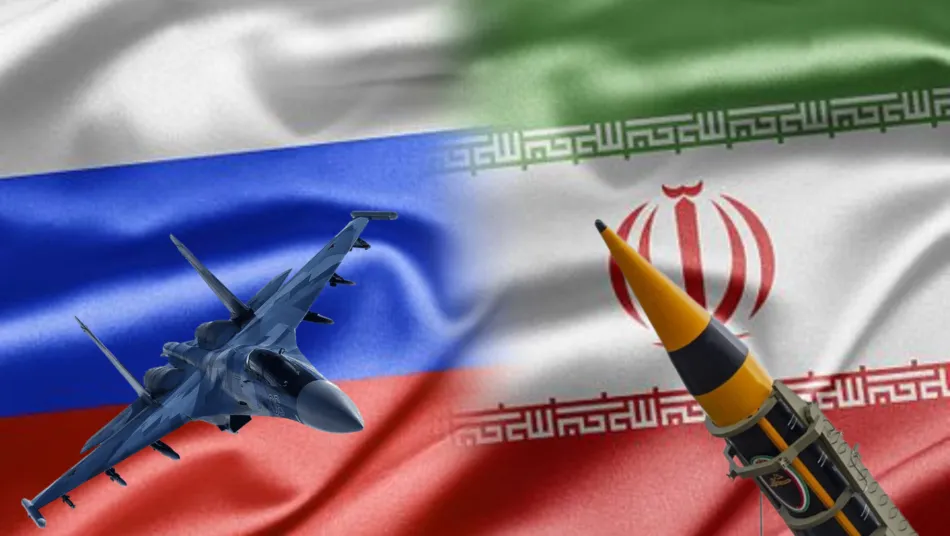
The conflict centered on Iran has stopped, the crisis frozen, on the US-Iran-Turkey axis.
The US-Iran relationship is often misinterpreted. The discussion usually revolves around what the mullah regime in Iran has gained for America. However, that is not the real issue. The real issue is how Washington sets the rules of the game. For America, the decisive factor is not the existence or non-existence of a regime, but the ability to control when that regime will decline, when it will relax, and how far it can advance.
This approach is not unique to Iran. In many countries around the world, Washington prioritizes predictability and controllability over the legitimacy debates of domestic politics. Being manageable is more important than being liked or disliked.
This picture is not new. For great powers, the main issue in crisis regions is not liking the regimes, but managing uncertainty. Sudden collapses provide short-term relief, but create greater risks in the long term. Therefore, states prefer a predictable balance, even with structures they dislike, to uncontrolled disintegration.
From this perspective, Iran is not a good actor for America. It is certainly not a friend. However, it is a familiar and predictable counter-enemy. It is harsh, noisy, but its limits are clear. It is less risky than a completely collapsed structure whose leadership is unknown. America dislikes the unknown; it prefers manageable tension to uncertainty.
This is precisely why Washington does not want a sudden and harsh collapse of the regime in Iran. Such a collapse would not only affect Tehran. A wide range of areas would be shaken simultaneously, from energy flows through the Strait of Hormuz to Gulf security and the balance of power in Israel. An uncontrolled scenario would strain America's capacity for crisis management and make the process unpredictable.
As long as Iran remains standing, America's military and political presence in the region becomes more pronounced. Gulf countries would need Washington's security umbrella more, and the perception of threat to Israel would remain alive. This creates a foundation that fuels the continuity of military bases, defense agreements, and arms supply processes. If the risks emanating from Iran decrease, these balances would be re-evaluated.
Therefore, sanctions are harsh but controlled. The rhetoric is sharp, but military intervention is limited. Although the term "regime change" is sometimes mentioned, in practice, certain limits are not exceeded. From the American perspective, the preferred scenario is neither the complete strengthening nor the complete collapse of Iran. Rather, a political structure that remains stable but whose room for maneuver is limited by international balances is preferred.
Turkey, at this point, acts within the framework of its own security approach and statecraft, maintaining balance and prioritizing regional stability. Ankara has never openly advocated for regime change in Iran at any stage. On the contrary, a consistent line has been adopted, centering on the principles of state integrity, stability, and non-interference in internal affairs. The security, migration, and instability risks that a sudden and abrupt collapse could bring to Turkey are carefully calculated.
This approach reflects Turkey's state reflexes during times of crisis. Neither does it advocate for a regime, nor does it take the lead in its destruction. Turkey prefers to maintain a line that manages risks without escalating them, considers inter-institutional balances, and anticipates regional consequences. This stance reflects a state philosophy that prioritizes long-term stability over short-term gains.
America does not directly benefit from Iran. However, through the Iranian file, it attempts to shape the balance of power in the region, along with other actors. The function of the Mullah regime for Washington is not prosperity or friendship. Its function is to generate a certain level of threat, but to keep that threat within controllable limits.
For America, the real power lies not in eliminating the opposing political structure, but in managing the direction and timing of the process.
Çetin Ay
BWA President